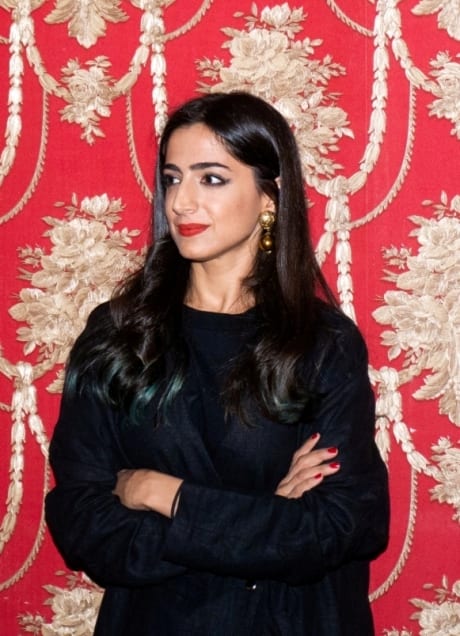
Founding the UAE’s first independent arthouse film house was a labour of love and a collaboration that has allowed Butheina Kazim to bring the magic of cinema to wider audiences and to propogate tolerance through mutual understanding and storytelling.
Art Dubai, who just announced a working partnership with Cinema Akil, spoke to Founder Butheina Kazim about her love for film and her motivation behind promoting film as an art form.
Interview with Anna Seaman
“Cinema Akil was borne from the necessity of having a year-round alternative film programme,” she says. “It is true that we were dependent on a certain kind of development in the art scene for us to attract the kinds of audiences that are interested in our kind of programme. Any growth in the art infrastructure is a litmus test for the readiness of audiences to engage with mediums like arthouse film.”
The first Cinema Akil event was in July 2014, with a summer programme that showed at The Third Line gallery. The screenings included both regional and international classics such as Annemarie Jacir’s When I Saw You and Alfred Hitchcock’s Dial M for Murder played alongside films produced by the gallery’s artists such as Sophia Al Maria, Joana Hadjithomas & Khalil Joreige and Fouad El Khoury. The event was very informal with 75 beanbags for seating and potato chips for snacks but it was a full house every night. That’s when Kazim realised the appetite for independent film was alive and well.
Four years later and the permanent space is now open with fantastic programming that ranges from McQueen – a personal look at the life, career and artistry of Alexander McQueen – to Yomeddine, the Oscar-nominated Egyptian on-the-road comedy. “We have built up good relationships with regional and international distributors to make sure that all the films we show support the industry in the right way and honour the copyrights, which is something we never compromise on,” says Kazim.
Having a new partnership with Art Dubai is a vital part of growing the shared interests of art and film across the city and the region, she concludes. “Cultural partnership is vital,” says Kazim. “It is how we started and how we have continued to grow. Our mutual understanding is that there is a need to grow larger communities in the world of art and partnerships allow for that growth, and to develop healthy and robust environment from which to operate.”